








Sport


Share
Published 16:26 7 Apr 2021 BST
Updated 14:32 7 Apr 2021 BST
Explore more on these topics:
 Last December, dance teachers staged a protest outside the Dáil, a demonstration asking their classes be recognised under Level 3 restrictions along with other group training sessions. Eventually, classes were permitted to resume, but only for a short time as the country plunged back into strict lockdown soon after Christmas.
Since then, students have returned to their Zoom classes, unsure as to when they will see a studio again. Cathy is glad she can still teach, but says the concerns of professional dancers, and the impact of training at home, have been largely ignored.
"As a dancer, you have to constantly feed your body and be active," she says. "If you’re not doing that, it will get to the stage when you are called back to work and you’re not ready, you’re prone to injury.
"Most dancers haven’t been able to train, unless you know someone who has a dance studio. I’m training in my living room, I’m dodging furniture, the floor is having an impact on my feet. It’s quite damaging."
The Arts Council recently announced grants for high profile, national, and independent dance projects in a bid to offer opportunity and fund work for Ireland's home grown artists.
Despite this, many still see the council's funding process as fundamentally flawed, pandemic or no pandemic. Just this year a new trade union, Praxis, was set up in support of Ireland's artists, fighting for better wages and working conditions, as well as a change in how funding is distributed - issues that Irish creatives were struggling with long before Covid hit.
“The vast majority of eligible applications will not receive any funding,” Praxis member Azzy O'Connor recently told Hot Press, "yet artists are expected to invest significant time in their applications. Artists can lose up to a month’s work to the highly bureaucratic process.”
Last December, dance teachers staged a protest outside the Dáil, a demonstration asking their classes be recognised under Level 3 restrictions along with other group training sessions. Eventually, classes were permitted to resume, but only for a short time as the country plunged back into strict lockdown soon after Christmas.
Since then, students have returned to their Zoom classes, unsure as to when they will see a studio again. Cathy is glad she can still teach, but says the concerns of professional dancers, and the impact of training at home, have been largely ignored.
"As a dancer, you have to constantly feed your body and be active," she says. "If you’re not doing that, it will get to the stage when you are called back to work and you’re not ready, you’re prone to injury.
"Most dancers haven’t been able to train, unless you know someone who has a dance studio. I’m training in my living room, I’m dodging furniture, the floor is having an impact on my feet. It’s quite damaging."
The Arts Council recently announced grants for high profile, national, and independent dance projects in a bid to offer opportunity and fund work for Ireland's home grown artists.
Despite this, many still see the council's funding process as fundamentally flawed, pandemic or no pandemic. Just this year a new trade union, Praxis, was set up in support of Ireland's artists, fighting for better wages and working conditions, as well as a change in how funding is distributed - issues that Irish creatives were struggling with long before Covid hit.
“The vast majority of eligible applications will not receive any funding,” Praxis member Azzy O'Connor recently told Hot Press, "yet artists are expected to invest significant time in their applications. Artists can lose up to a month’s work to the highly bureaucratic process.”
 According to a 2010 study, commissioned by the Arts Council, the average worker in Ireland “had earnings in 2008 of more than 1.4 times the total average income of an artist.” The research also found that under half (41%) of artists actually worked full time as an artist.
So with lower wages, few contracts, and better opportunities elsewhere, it's no surprise that Ireland's dancers are making like many members of the entertainment industry and leaving for greener pastures. That's not to say that Ireland doesn't have any opportunities - it does - but naturally, when they do arise, they are very, very competitive.
Earlier this year, it was announced that Disney had opened a casting call for dancers in Ireland to perform in a new film shooting this summer. The call said that the company was seeking local dancers proficient in ballet, jazz, and waltz.
But despite industry wide excitement and the elevation that such a role would give to an Irish dancers CV, Cathy hasn't heard of many dancers being cast in the production just yet. In fact, at the time of writing, she says she's only aware of two people who have secured roles.
"It’s a great opportunity for Ireland and the film industry, there’s a huge sense of pride that they’re shooting here," she says. "I just wish someone has put something in place to make sure the jobs went to Irish dancers. Are we not valued?"
(Disney's casting choreographer for this project could not respond to Her's queries regarding the number of Irish dancers already cast in the project due to contract issues.)
According to a 2010 study, commissioned by the Arts Council, the average worker in Ireland “had earnings in 2008 of more than 1.4 times the total average income of an artist.” The research also found that under half (41%) of artists actually worked full time as an artist.
So with lower wages, few contracts, and better opportunities elsewhere, it's no surprise that Ireland's dancers are making like many members of the entertainment industry and leaving for greener pastures. That's not to say that Ireland doesn't have any opportunities - it does - but naturally, when they do arise, they are very, very competitive.
Earlier this year, it was announced that Disney had opened a casting call for dancers in Ireland to perform in a new film shooting this summer. The call said that the company was seeking local dancers proficient in ballet, jazz, and waltz.
But despite industry wide excitement and the elevation that such a role would give to an Irish dancers CV, Cathy hasn't heard of many dancers being cast in the production just yet. In fact, at the time of writing, she says she's only aware of two people who have secured roles.
"It’s a great opportunity for Ireland and the film industry, there’s a huge sense of pride that they’re shooting here," she says. "I just wish someone has put something in place to make sure the jobs went to Irish dancers. Are we not valued?"
(Disney's casting choreographer for this project could not respond to Her's queries regarding the number of Irish dancers already cast in the project due to contract issues.)
 Back in March, the government announced the details of a new €50 million fund to support the live entertainment industry during the pandemic. While the fund is most welcome, it is primarily focused on live music, venues, promoters, musicians, and producers, meaning that many of the country's dancers may not reap the benefits.
For Cathy, such problems are frustrating, but they're not surprising. Ireland's talent pool tends to leave its shores at one point or another, and is often praised for doing so.
Back in March, the government announced the details of a new €50 million fund to support the live entertainment industry during the pandemic. While the fund is most welcome, it is primarily focused on live music, venues, promoters, musicians, and producers, meaning that many of the country's dancers may not reap the benefits.
For Cathy, such problems are frustrating, but they're not surprising. Ireland's talent pool tends to leave its shores at one point or another, and is often praised for doing so.
"All our dancers go abroad to train and they’ll stay there," she says. "There’s no incentive to come home, there’s no jobs. I’ve found it hard to compete with people who have been here for years for work, but it wasn’t my choice to leave Ireland. I wanted to better myself and couldn’t do that here.
"Dance is seen as an uplifting thing, but everyone’s struggling. We need to support local artists who are here. Stars like Saoirse Ronan are praised for leaving when they accomplish things overseas, but what about the Irish artists at home?
"It starts here, we need to put in the support, lay the foundation, and start creating jobs for Irish people, not hiring people overseas. We have a talent pool, we just don’t have the opportunities."
*Some names have been changed.
Sport
Sport
Sport
Sport
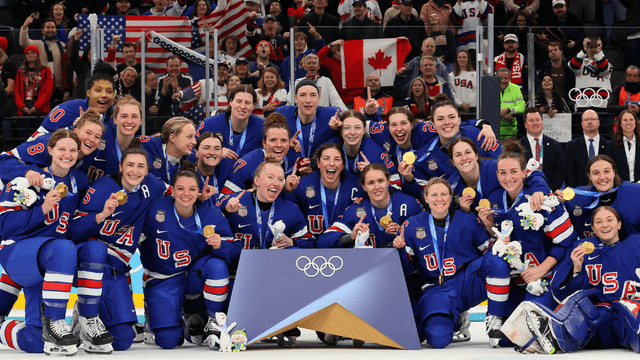
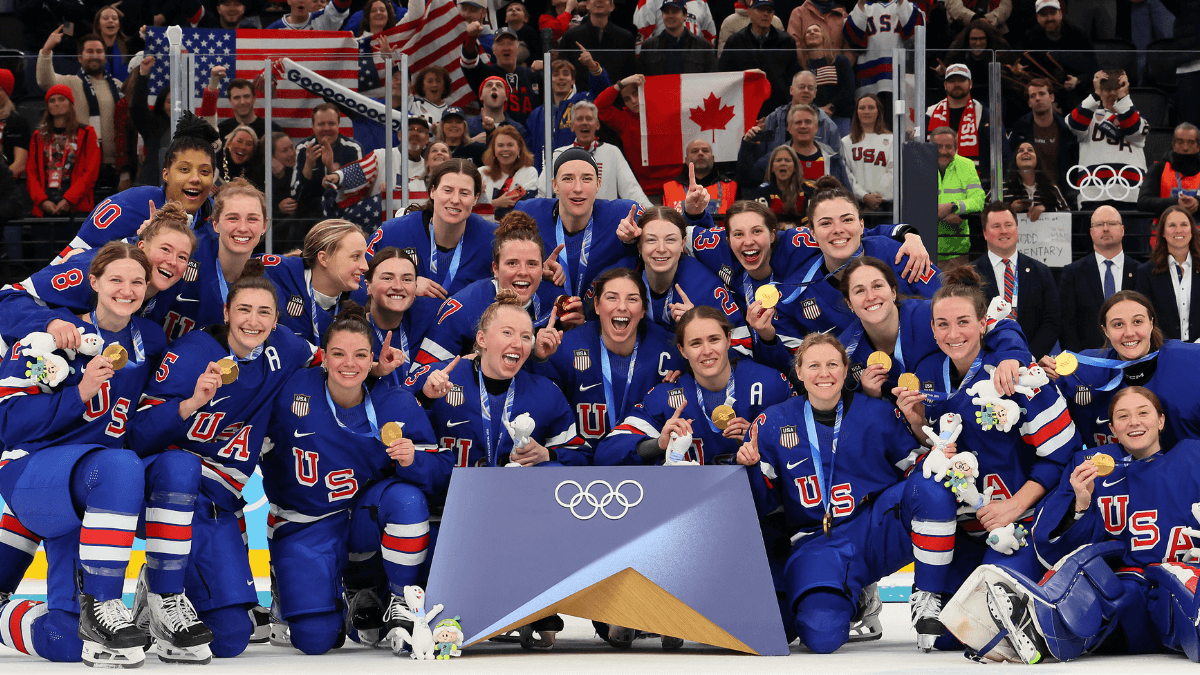
US women’s ice hockey team decline White House invite a day after ‘distasteful’ Trump joke
The US team won the gold medal at the Olympics The gold-medal-winning US women’s ice hockey team has rejected Donald Trump’s invite to attend his State of the Union address, one day after he made a distasteful joke about the women’s team. The USA enjoyed their best-ever haul of gold medals at a Winter Olympics, […]
Sport
4 months ago
The one sport in the Winter Olympics which women are not allowed to compete in
It’s the only event without a women’s category While gender parity in the Olympics has come along way in recent years, certain issues across the events in both the Summer and Winter Olympics remain. Women’s versions of events that men already compete in continue to be added, with women’s double luge only making its debut […]
Sport
4 months ago
Former Olympian reveals why athletes have so much sex during the games
Sport