






News

Share
Published 13:23 27 Aug 2025 BST
Updated 13:31 27 Aug 2025 BST
 Add us as a preferred source on Google »
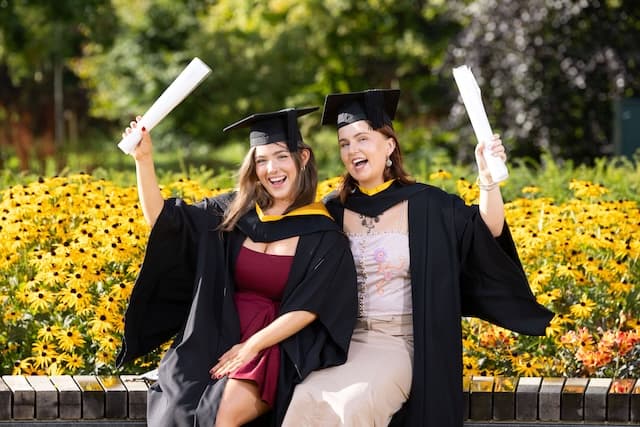
A University of Limerick graduate has designed the world's first fully accessible saliva-based pregnancy test for visually impaired women.
UL graduate Leah Shanahan was inspired by her personal experience as a visually impaired woman.
Leah’s design is the first saliva-based, reusable, accessible pregnancy test to deliver results through touch, sight, and sound.
‘AMY’ addresses a practical healthcare challenge through user-centred design with inclusivity at the heart of the product.
The reader uses photosensor technology, similar to that found in digital pregnancy tests. A raised plus or minus symbol on the reader can be felt by touch. It also includes a feature that allows users to tap their phone to open a webpage where they will view a bold red or green symbol along with large, high-contrast text for those who are partially sighted, and users can also choose to hear the result aloud.
Leah was driven to create 'AMY' after realising that blind and visually impaired women were excluded from the intimate moment of discovering their own pregnancies.
“I wanted to create a product that restores independence and dignity in this experience," Leah shared.
She used her skills in design and her understanding of accessibility to make a real difference.
Through its considered design, Leah hopes that AMY will help to restore privacy and independence to blind and visually impaired women during the testing process. The multisensory approach ensures that users with different levels of vision or additional disabilities can independently access their results with confidence and dignity.
Leah’s parents discovered that she was visually impaired when she was four years old. Leah is legally blind in one eye.
“I have poor peripheral vision on my left, and my friends laugh at me squinting to see things in the distance, but overall, it’s not much different than any other person who has poor vision.”
“I think it’s important I don’t overstate my experience of sight loss, especially since working with the blind women I spoke with for this project.
Leah said "seeing how it affects every aspect of their lives" was so important for her.
“My experience of sight loss served as inspiration for this project. But without them sharing their lived experiences, this project never would have been possible."
Speaking about their experience of working with Leah, one of the research participants, Jackie McBrearty said:
“I really appreciated Leah coming to the blind community to get our views on what would work for us and what wouldn’t.
"Her design gives blind women privacy during one of the biggest moments of their lives. It could be either the worst or the best thing ever for them."
Leah originally planned to study Physics and Maths at UL, but wanted something more creative.
After switching to Product Design and Technology, Leah found a home in the studio with her fellow design students.
Associate Professor Dr Louise Kiernan, School of Architecture and Product Design, praised Leah for designing a "much-needed product."
"Leah has been a dedicated student and a pleasure to work with. She showed great empathy and understanding of her research participants, and worked with them to create a very innovative solution.”
Explore more on these topics:


News
News

News

News
Signs Charleen Murphy could be heading into the Love Island villa labi e
We’re convinced! Many Fans were left disappointed when Irish influencer Charleen Murphy was missing from the original Love Island line-up ahead of this season. And after the first few “bombshell” arrivals of the season, fans are beginning to lose hope that their favourite content creator will be making an appearance on this year’s show. However, die-hard […]
News
1 day ago
Vogue Williams reveals new baby’s name is ‘a bit mad’
Even Joanne McNally was ‘a bit taken aback’ In a recent podcast episode, Vogue Williams has admitted the name of her fourth baby is ‘a bit mad’. The Irish TV star announced she is expecting her fourth child with husband Spencer Matthews in an Instagram post in April. View this post on Instagram A post […]
News
1 day ago
Ireland’s tidiest and most littered towns have been revealed
News


