









News


Share
Published 16:46 13 Jan 2021 GMT
Updated 16:52 13 Jan 2021 GMT
Explore more on these topics:
 A poem at the Tuam Bon Secours site, photo by Charles McQuillan[/caption]
For too long Ireland relied on the teachings of Catholicism to stunt its growth. Aversions to pre-marital sex, contraception, abortion, same-sex-marriage, and divorce dominated Irish society for almost a century, telling families what was right, what was wrong, and what would happen to you if you didn't play along.
According to the commission's report, women were not "forced" into these homes. Rather, it said they entered them because they felt they had nowhere else to go, a rumination which begs the question: what does it mean to be "forced" and did these women really have any other choice?
It appears that they didn't, with many reporting feeling totally shamed into silence and desperate to hide away, forced into the only space that would take them, quietly.
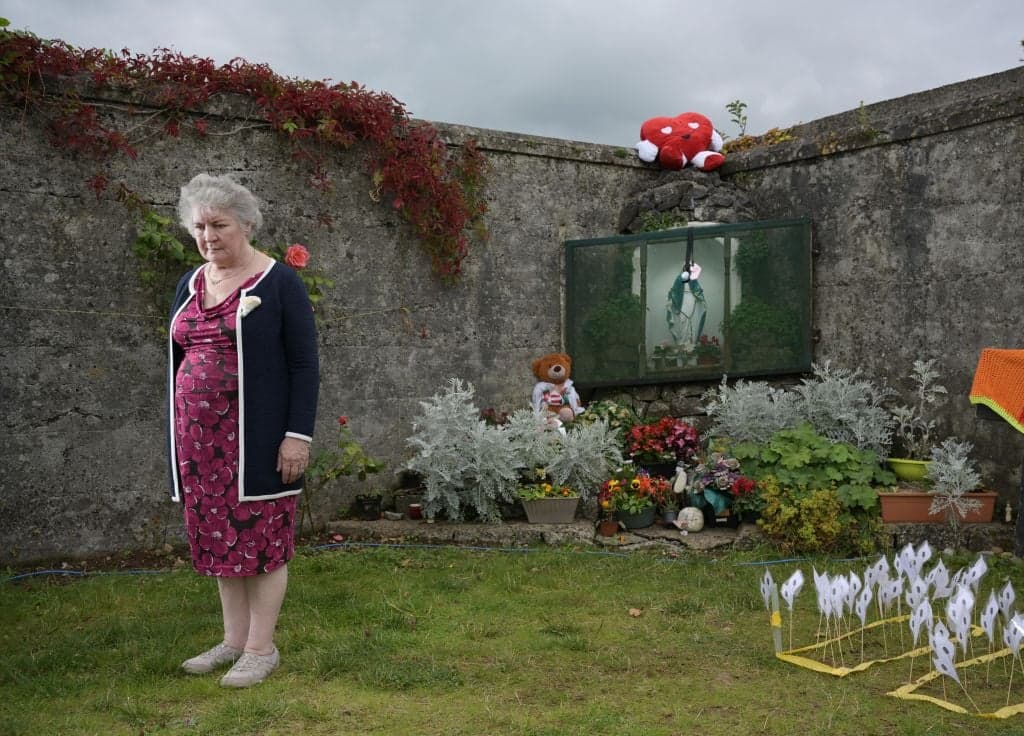
It's a forceful silence that even now continues to rear its head. Catherine Corless, the historian who discovered the bodies of almost 800 babies buried in a mass grave in Tuam, has spoken publicly of locals who pleaded that the matter be left alone, that the truth remain buried.
Corless, whose research came to light in 2014, said that once the story went national, she was contacted by members of the Bon Secours order who told her that she had upset some of the nuns.
We can blame our ancestors, and we can blame ourselves, but are we then deflecting blame from those who deserve it most? Are we securing the horrors of the Mother and Baby Homes to a past time, to a society and a leadership fundamentally different to our own? Are we saying that that was then, but this is now?
[caption id="attachment_516500" align="aligncenter" width="1024"]
A poem at the Tuam Bon Secours site, photo by Charles McQuillan[/caption]
For too long Ireland relied on the teachings of Catholicism to stunt its growth. Aversions to pre-marital sex, contraception, abortion, same-sex-marriage, and divorce dominated Irish society for almost a century, telling families what was right, what was wrong, and what would happen to you if you didn't play along.
According to the commission's report, women were not "forced" into these homes. Rather, it said they entered them because they felt they had nowhere else to go, a rumination which begs the question: what does it mean to be "forced" and did these women really have any other choice?
It appears that they didn't, with many reporting feeling totally shamed into silence and desperate to hide away, forced into the only space that would take them, quietly.
It's a forceful silence that even now continues to rear its head. Catherine Corless, the historian who discovered the bodies of almost 800 babies buried in a mass grave in Tuam, has spoken publicly of locals who pleaded that the matter be left alone, that the truth remain buried.
Corless, whose research came to light in 2014, said that once the story went national, she was contacted by members of the Bon Secours order who told her that she had upset some of the nuns.
We can blame our ancestors, and we can blame ourselves, but are we then deflecting blame from those who deserve it most? Are we securing the horrors of the Mother and Baby Homes to a past time, to a society and a leadership fundamentally different to our own? Are we saying that that was then, but this is now?
[caption id="attachment_516500" align="aligncenter" width="1024"] Catherine Corless and survivor Carmel Larkin, by Charles McQuillan[/caption]
Many commentators have said that it is hard to hear Martin's speech, read the Mother and Baby Homes report, consider the pain caused by these institutions, and not be reminded of those living in Direct Provision.
Right now there are over 7,000 people currently living in the asylum seekers system, the average time spent there being two years. 30% of those living there are children, who in the past have spoken of feeling "unsafe" in the immensely overcrowded system.
The government last year announced its plans to end Direct Provision, but the system expected to replace it has yet be founded and the exact time frame of this abolition is not yet known.
Ireland has a history of abandoning its women. Damning examples of rejection, stigma, and exile have plagued us throughout the last century and beyond, as we are consistently reminded of another State failing, another family torn apart, another life ruined.
In the 21st century alone we have seen the CervicalCheck scandal, we have heard the stories of those forced to travel for abortions, we have learned of the pain suffered by so many silenced voices finally coming to the light.
It was only 22 years ago that the last Mother and Baby Home was closed in Ireland. Two years before that, the last Magdalene Laundry shut its doors.
Irish women deserve better here and now, but they deserved better long before we were talking about it too.
Feature image by Charles McQuillan via Getty.
Catherine Corless and survivor Carmel Larkin, by Charles McQuillan[/caption]
Many commentators have said that it is hard to hear Martin's speech, read the Mother and Baby Homes report, consider the pain caused by these institutions, and not be reminded of those living in Direct Provision.
Right now there are over 7,000 people currently living in the asylum seekers system, the average time spent there being two years. 30% of those living there are children, who in the past have spoken of feeling "unsafe" in the immensely overcrowded system.
The government last year announced its plans to end Direct Provision, but the system expected to replace it has yet be founded and the exact time frame of this abolition is not yet known.
Ireland has a history of abandoning its women. Damning examples of rejection, stigma, and exile have plagued us throughout the last century and beyond, as we are consistently reminded of another State failing, another family torn apart, another life ruined.
In the 21st century alone we have seen the CervicalCheck scandal, we have heard the stories of those forced to travel for abortions, we have learned of the pain suffered by so many silenced voices finally coming to the light.
It was only 22 years ago that the last Mother and Baby Home was closed in Ireland. Two years before that, the last Magdalene Laundry shut its doors.
Irish women deserve better here and now, but they deserved better long before we were talking about it too.
Feature image by Charles McQuillan via Getty. 
News

News

News

News
Signs Charleen Murphy could be heading into the Love Island villa labi e
We’re convinced! Many Fans were left disappointed when Irish influencer Charleen Murphy was missing from the original Love Island line-up ahead of this season. And after the first few “bombshell” arrivals of the season, fans are beginning to lose hope that their favourite content creator will be making an appearance on this year’s show. However, die-hard […]
News
3 days ago
Vogue Williams reveals new baby’s name is ‘a bit mad’
Even Joanne McNally was ‘a bit taken aback’ In a recent podcast episode, Vogue Williams has admitted the name of her fourth baby is ‘a bit mad’. The Irish TV star announced she is expecting her fourth child with husband Spencer Matthews in an Instagram post in April. View this post on Instagram A post […]
News
3 days ago
Ireland’s tidiest and most littered towns have been revealed
News


