






Health

Share
Published 11:45 17 Jan 2022 GMT
Updated 11:49 17 Jan 2022 GMT
Explore more on these topics:
"We were thinking, is this what life is about? Are we really going to spend all our time together talking about what new diet we’re on? The conversation had become dull and boring, so we made a pact to stop talking about it. Dieting couldn’t be what we bonded over anymore."
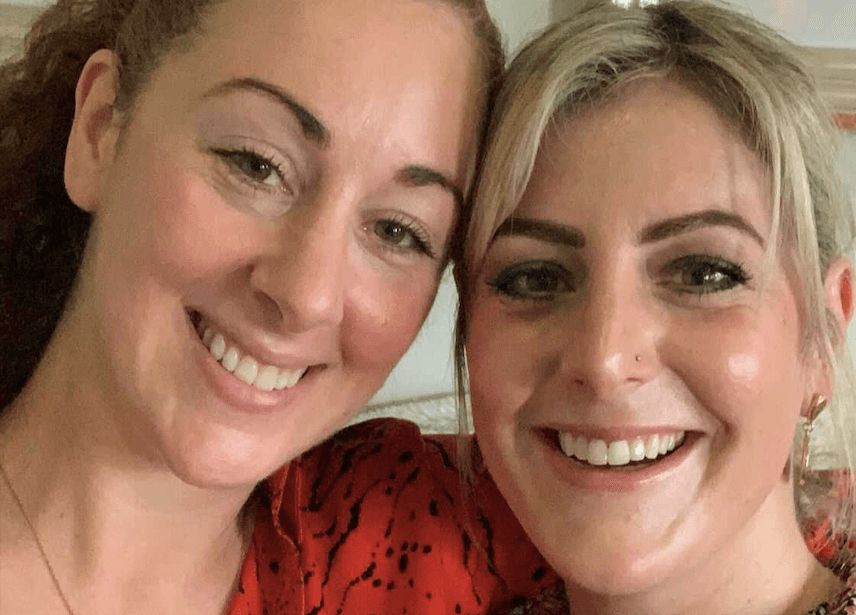
Gillian, a yoga teacher and social worker, adds: "I thought the fact I liked chocolate was something to fix! I also had the [intuitive eating] workbook on my shelf for quite awhile before I looked at it. One day Sinéad pulled it out of her bag and I realised I already had it too. "We are never ready before the moment we are ready and that's okay. Not being an 'intuitive eater' is not another reason to shame ourselves - we have enough of that in our culture." [caption id="attachment_545122" align="aligncenter" width="712"] Gillian and Sinéad Crowe[/caption]
Although the concept of intuitive eating and its 10 core principals has grown in Ireland in recent years, it's far from the only shift away from diet culture that this country - and beyond - has seen. Where magazine covers were once dominated by 'Get bikini body ready this summer' features and runways were commanded only by models in size 0 clothing, bigger bodies, mid and plus sized, are represented more in media than ever before.
Irrespective of this, rejecting dieting in wider society is still largely seen as taboo. One place it's not, however, is within small factions of Instagram, where thousands of users have been coming together in an attempt to re-train how their minds think about food, learn about what kinds of exercise work for them, and achieve a happy, healthy lifestyle that isn't focused on dieting.
Having the support of others, Sinéad says, is necessary when venturing into a world beyond restrictive eating. Before the Instagram community, she and Gillian had each other. That, she says, was crucial.
Gillian and Sinéad Crowe[/caption]
Although the concept of intuitive eating and its 10 core principals has grown in Ireland in recent years, it's far from the only shift away from diet culture that this country - and beyond - has seen. Where magazine covers were once dominated by 'Get bikini body ready this summer' features and runways were commanded only by models in size 0 clothing, bigger bodies, mid and plus sized, are represented more in media than ever before.
Irrespective of this, rejecting dieting in wider society is still largely seen as taboo. One place it's not, however, is within small factions of Instagram, where thousands of users have been coming together in an attempt to re-train how their minds think about food, learn about what kinds of exercise work for them, and achieve a happy, healthy lifestyle that isn't focused on dieting.
Having the support of others, Sinéad says, is necessary when venturing into a world beyond restrictive eating. Before the Instagram community, she and Gillian had each other. That, she says, was crucial.
"We were a support for one another, we were able to wrap our heads around it together and talk about our fears and anxieties," she says. "One of the biggest worries people have is that you’re doing something radical, and you are. Society pushes weight loss, it's everywhere. To question that can lead to a lot of doubt, especially if you don’t have a support system.
"A lot of people message us saying they’re the only person in their family or their friendship group who isn’t trying to diet. Last month we had our first Zoom event and people shared their own experiences and struggles around Christmas time, and it really was quite therapeutic. It reinforces that sense of connection."
Gillian says that while she sees change as ultimately slow in the wider community, on her Instagram page, the desire for something more substantial than dieting has been palpable. A systemic shift, she says, will take a lot of time, but as with anything you've got to start somewhere. "It was fascinating to see how many people were ready and also desperate, like myself, for a change," she says. "We were so ready to stop hating our bodies and trying to fix ourselves." https://www.instagram.com/p/CYKQhiNMtnZ/ January can be a tough time for anyone who has ever experienced an eating disorder, or had a patchy relationship with food. This month has seen the conversation become more pointed amidst the return of Operation Transformation to Irish TV. The health and wellness show, which has long been a purveyor of the televised weigh-in, received fresh criticism this month, maybe most significantly from national eating disorder association Bodywhys, who said that it had been repeatedly triggering for many of its service users. Hundreds of tweets, a trending hashtag, and one petition by Sinéad and dietician Jo Moscalu later, RTÉ defended the series for "evolving" over the years, stating that it now takes a "more holistic approach to adopting and maintaining a healthy lifestyle as well as losing weight." But for many, the shift was not enough. As Sinéad puts it, it's great that such a popular show advocates for healthy behaviours, "but the reality is that people are tuning in to see a physical transformation.""That’s the aspect that’s enticing to audiences. It would be difficult to get the same viewership if they didn’t focus on weight loss. That doesn’t mean they shouldn’t try though. Until they scrap the weighing scales and the calorie restrictive diets then it’s just not good enough."
So what's next? Podcasts like Maintenance Phase have shown that there is an alternative narrative to dieting. TV shows like Queer Eye have proven the 'transformation' programme doesn't always have to be focused on the physical. But will we ever reach a point where making positive changes to one's body isn't defined by weight loss?“It’s so pervasive, and it’s difficult to imagine a life where people don’t live their lives wanting to be smaller," says Sinéad. "That may always be there, but we are moving into more of an educated territory where weight does not define us. It is one of many factors that determines health, but it’s not the only one.
“I’m not judging anyone who diets, I fell into that trap for two decades. But when we engage in health promoting behaviours, find movement we enjoy, eat a nutrient dense diet, stay hydrated, practice sleep hygiene and stress management - when we do this, we improve our overall health. If more people were aware of this, we might find ourselves not solely focused on weight loss."
As is the case for many Irish women, Sinéad and Gillian grew up during a time when the only way to better yourself was to be smaller, and the only bodies worth shouting about were slim. They say that having access to anti-diet material, as well as the support of a dedicated community, would have made a considerable difference to their own attitudes towards health in their younger years. "It's only in recent years that I have even reflected on what health means to me," Gillian says. "Now I understand health as a very holistic concept not only about physical health but also the mental, emotional, spiritual, and social. "As painful as my journey has been with distressed eating behaviours and body image difficulties I have also learned so much about myself and know how resilient I am. It has also given me the gift of being part of a community of people who are committed to seeing and feeling their essential goodness no matter what they look like." You can follow Sinéad and Gillian Crowe at Intuitive Eating Ireland here.
Health
health

Health

Health
Health
Health
Europe’s sunniest cities have been revealed in new study
These cities are the sunniest in Europe. Summer is officially here! If you’ve been looking for well-deserved city break for some sunshine, look no further, as new research has confirmed Europe’s sunniest cities. A new study completed by holiday rental platform Holidu has officially released a list of Europe’s sunniest cities. It analysed data from […]
Health
5 days ago
Are saunas actually good for you? Here’s what experts have to say
Experts have confirmed whether saunas are actually good for our health. In Ireland, the use of saunas is becoming an increasingly popular pastime. As the Finnish custom becomes widespread across the country, people have been left wondering if it’s actually good for our health. Associate Professor of Extreme Environments at the University of Portsmouth, Dr […]
Health
5 days ago
One Irish dad is about to appear on billboards across Ireland this Father’s Day
Health