

Share
Published 15:29 13 Aug 2025 BST
 Add us as a preferred source on Google »
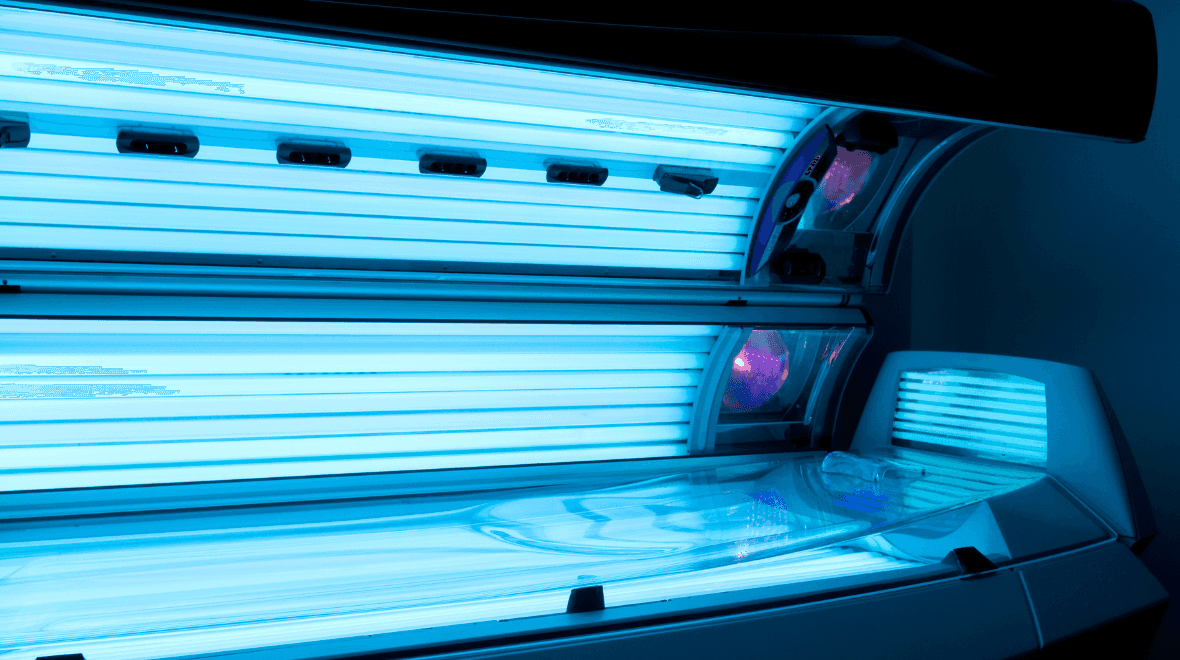
Many of us are aware of the dangers of using sunbeds, but others continue to glamourise them.
Sunbeds are still concerningly popular with people in Ireland, which is why 45-year-old Gill Costelloe is sharing her story.
The Dublin woman wants to speak out about her skin cancer diagnosis in the hope of stopping people from using sunbeds.
Skin cancer is Ireland’s most common cancer, and the National Cancer Registry of Ireland (NCRI) expects the number of people diagnosed with skin cancer in Ireland to double by 2040.
Gill was first diagnosed with skin cancer in 2016 after a friend noticed a mole on her back and advised her to get it checked out. It was a stage one melanoma, which was removed.
All was going well until five years later, in 2021, when Gill fainted a few days in a row. It was discovered that she had a recurrence of melanoma that had spread.
Skin cancer survivor Gill Costelloe said: “I used sunbeds and spent years sunbathing to get a tan to look healthy but, ironically, I’m far from healthy now. I did sunbeds when I was younger before I’d go on a sun holiday, so I wouldn’t burn. It's no wonder I got skin cancer.
“I was an avid cyclist and never once considered the damage I was doing to my body being out on the bike for hours on end with no sunscreen.”
Gill only recently got her first clear scan, but is still living with the side effects of having skin cancer and going through treatment.
On the impact of her diagnoses, Gill said: “Now I’m afraid to get back on the bike in case I have a crash and end up in a wheelchair, as I have cancer in my hip bone. It kills me that I can no longer do what I love.
“I do still go out and enjoy myself when it’s sunny, but I wear a hat and cover up. I wear SPF every day now, even when it’s cloudy. There are some great fake tans available now too, which I love.”
Gill wants to share her story to highlight the importance of getting moles and skin changes checked, and to make people stop and think before using sunbeds.
Commenting on the perception of skin cancer, Gill said: “People think that skin cancer isn’t serious. Melanoma, even when it’s surgically removed from the skin, can come back and spread to other parts of your body.
“Mine was caught early, but still spread to my liver, my lung, my breast, my stomach, my abdominal cavity, and my hip bone. I nearly died and spent three months in hospital. I’m very, very lucky to be here today to tell my story.”
Gill is now doing well and is continuing to take a tablet-based chemotherapy. One of the lasting effects of her diagnoses is that she always worries about her cancer coming back.
However, she feels strongly about the great strides that have been made in cancer research and treatment in recent years.
Speaking about what life is like for her now, Gill said: “I’m still living from scan to scan, and I will always have that fear of it coming back again.
She said there is still hope.
“When I found out my cancer had come back and had spread, my oncologist told me that if we were having this conversation five or six years before, it would’ve been a much sadder one. It’s just so, so important to get any skin changes checked – the earlier skin cancer is detected, the better the outcome.”
Speaking about the sheer number of skin cancer cases caused by sunbed use, Kevin O’Hagan, Cancer Prevention Manager at the Irish Cancer Society, said:
"Sun safety is vital, and that means protecting your skin, wherever you are, home or abroad. With most Irish people having fair skin, this will burn much quicker at soaring temperatures, and this greatly increases the risk of skin cancer. "
He also encouraged people to see their GP if they notice any skin changes.
"These can be a new or changing mole, a flat red spot, a firm red lump, an ulcer or spot that is tender to the touch, or rough and scaly patches."
Anyone with questions or concerns about skin cancer can contact the Irish Cancer Society Support Line on Freephone 1800 200 700 or [email protected]
Health