We've teamed up with the amazing Marie Keating Foundation for this year's Electric Ireland #PoweringKindness week. As well as supporting those with breast cancer, few people realise the charity work on behalf of men, women and children fighting cancer , while supporting their families and loved ones as they start their journey to recovery.
This week, to mark the start of our partnership, we look at how you might identify breast cancer - the most common cancer affecting women in Ireland.
______________________________________________________________________________________________
Breast cancer is the most common invasive cancer in Ireland, affecting one in every three women. Breast cancer is a disease in which malignant (cancer) cells form in the tissues of the breast.
Although breast cancer can be a complicated disease, there are some factors that could lead to added risk of you developing the disease. These can include:
- Older age
- Menstruating at an early age
- Older age at first birth or never having given birth
- A personal history of breast cancer or benign (non-cancer) breast disease
- Treatment with radiation therapy to the breast/chest
- Breast tissue that is dense on a mammogram
- Taking hormones such as estrogen and progesterone
- Drinking alcoholic beverages
- A mother or sister with breast cancer
For this reason, it’s important that women take active care in checking their breasts for any changes or lumps.
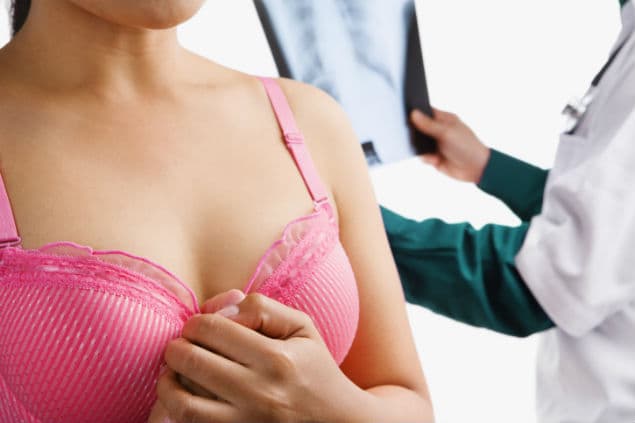
When in the shower, dressing, or standing in front of a mirror – take a few minutes to get to know the look and feel of your shape. Knowing what is normal for you means you’ll easily recognise when new changes occur in the breast and armpit area.
It’s important to note that not all changes to your breasts are signs of cancer; some women find their breasts feel lumpy or tender before a period.
In most women, breast cancer is usually detected by a painless lump in the breast. There are other signs though, and you should book in to see a doctor if any of the following symptoms occur when you’re carrying out a routine breast check:
- Any change in the size or shape of the breast
- Changes to the nipple area such as crusting, ulcers, redness, inversion or change in shape or direction of the nipple
- Dimpling of the skin of the breast
- A rash (similar in appearance to eczema) affecting the nipple
- Discharge from the nipple
- Swelling or lumps in your armpit
- Veins that are standing out more than usual
So how is breast cancer diagnosed?
Breast cancer can be diagnosed with a series of tests. The most common methods include:
- Mammogram – an x-ray of the breast
- Ultrasound – an ultrasound will take an image of the breast. This can be used instead of a mammogram, especially in younger women
- Biopsy – this is where a small sample of the breast tissue is removed using a needle guided by an ultrasound or x-ray. This is performed as an outpatient, and the results of the biopsy are usually available within one or two weeks.
If a patient is found to have breast cancer, a doctor will discuss treatment most suitable for them. This can range from surgery, radiotherapy, chemotherapy or hormonal therapy depending on the type and stage of cancer diagnosed.
 Where can I find out more information?
If you are concerned about your health, please contact your local GP immediately for a check-up.
The Marie Keating Foundation is a great online resource, with information on breast, bowel, cervical, lung, prostate, skin and testicular cancer.
Check out their website
here, for more information or alternatively, email any concerns you may have to their
Ask A Nurse service.
To get involved, tell us about your act of kindness on social media using #poweringkindness and tag @MarieKeating or go to www.poweringkindness.ie – make sure to include a photo or video of your kindness if you can. The charity with the most kindness done in their name will win the largest share of the €130,000 prizefund. Let's work together to make sure it's The Marie Keating Foundation!