Health


Share
Published 13:00 13 Apr 2026 BST
 Add us as a preferred source on Google »
A woman used Chat GPT to help uncover her rare diagnosis by inputting her symptoms – after her stiff legs were dismissed for anxiety.
Phoebe Tesoriere, 23, had always struggled with abnormal walking but it was initially put down to the absence of her left hip socket which she has since had bone grafts to restore.
She continued to struggle with an abnormal gait and spent four years being misdiagnosed with countless conditions - including anxiety and Todd's Paralysis - where your legs can become tied and stiff after seizures.
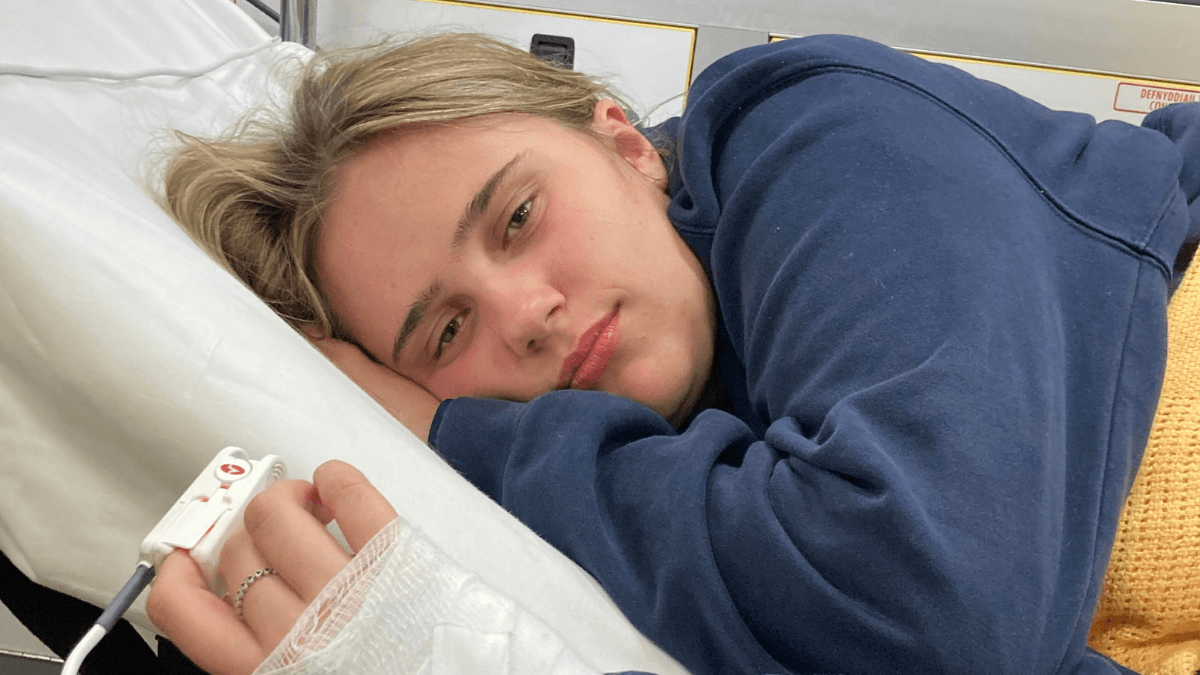
Despite a seizure in 2025 landing her in a coma for 48 hours and struggling to walk she was discharged and sent a letter by the doctor stating if she was to return to hospital she was to be treated as a mental health patient.
A "frustrated" Phoebe took to Chat GPT and input all her existing symptoms – being doubly incontinent, loss of feeling below her belly button and elbows, locked ankles, no reflexes or hyper reflexes, epilepsy, hair loss, and an inability to walk.
The bot pointed to Hereditary Spastic Paraplegia - a general term for a group of rare inherited disorders that cause weakness and stiffness in the leg muscles, with symptoms gradually get worse over time.
After taking her findings to her GP Phoebe underwent genetic testing which confirmed in August 2025 she had the complex quadriplegic type – which means it affects all four limbs.
It was confirmed that after being diagnosed with MRSA as a three-day old baby, Phoebe’s gene mutated and caused her condition.
She is now fundraising to afford a special wheelchair to help adapt to her diagnosis.
Phoebe, a former SEN teacher, from Cardiff, Wales, said: “It was such a bittersweet moment to be diagnosed after being told it was anxiety.
“To go from that to matter of weeks later being told actually you’ve got this condition which will change your whole life.
“It’s one of those things where I’m happy to have my diagnosis because it made sense but I’d rather it be anything else but this.
“People think ‘oh she just can’t walk’.
“Or ‘it’s a massive thing she’s had but at least it’s not a spinal cord injury’.
“It is, and it’s progressive.
“At night I have to wear splints on my arms to keep them functioning as long as possible.
“There is no treatment but my doctors hope they can slow the progression, but there’s nothing they can do to stop it”.
Phoebe had always struggled with “odd symptoms” growing up like an abnormal gait and having hypermobility which led to physiotherapy and tests for things like dyspraxia.
She was diagnosed with epilepsy February 2022 after collapsing at work and was later admitted to hospital with suspected appendicitis and was unable to feel her legs – though after a clear MRI she says she was told she had “probably just got anxiety”.
After struggling to walk she says doctors told her she had Todd’s Paralysis in December 2024.
Phoebe fell down the stairs at home after a seizure and was left unable to walk in January 2025, rushing to hospital to discover there was a presumed injury to her spinal cord – which was later confirmed to just be abnormalities due to HSP.
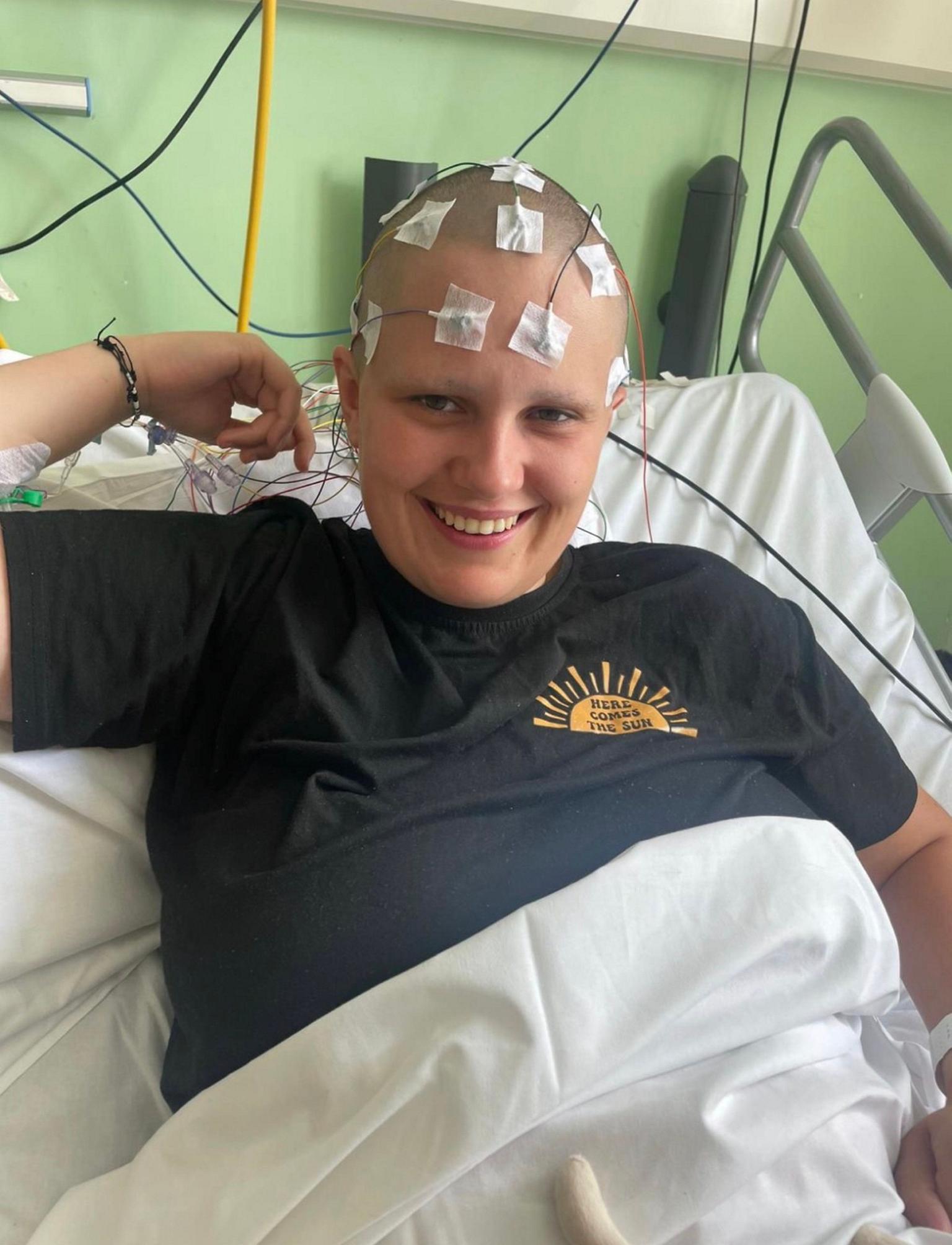
Two months of physiotherapy in hospital meant she was able to walk again, but Phoebe’s hair began to fall out in June 2025 leading her to shave it.
“When I was in physio and I started walking everyone was like ‘this is unheard of’ and ‘it’s a miracle’ kind of thing,” she says.
“In June 2025 my hair just fell out.
“It was falling out in clumps.
“I kept going to the doctors but they were putting it down to stress but like, clumps were coming out.
“Then they started saying my epilepsy medication was causing my hair to fall out.
“Around June 8 I decided to shave it off – I literally had no hair left”.
In another episode where she had a seizure in her sleep and partner Georgia, 24, was unable to wake her, Phoebe was admitted back to hospital where she was in a coma for 48 hours.
She says a neurologist informed her when she woke she did not have a spinal sord injury or epilepsy and that her condition was down to anxiety and trauma.
After being discharged Phoebe used Chat GPT to find out what was wrong - and Hereditary Spastic Paraplegia came up as an option.
“I thought I have all the symptoms surely I should be tested for this,” she said.
“I thought I’d just go to the doctors, they worst thing they could say is no.
“We did genetic testing and it came back I had the condition which explained everything.
“It turns out I had MRSA as a baby and when I spoke to a specialist in it he said basically there was an MRI when I was 15 on my hip that showed signs of my nerves deteriorating in that, but doctors would not have known to pick it up.
“There are loads of side effects like speech issues and early dementia.
“It’s such a rare disease nobody knows about it and mine is one of the rarest you can have”.
Phoebe can now only get up and downstairs with the help of partner Georgia, in their rented two-bed home.
Due to being incontinent she has to catheterise herself six times a day and is unable to return to work.
She has physio once a week and is looking into Botox injections that may help her walk.
Sister Yasmin, 32, has set up a fundraiser to help buy a specialised wheelchair for Phoebe.
Phoebe said: “I need a specific back on my wheelchair to support my spine and stop it deteriorating.
“I want to stay as independent as I can and obviously the type the NHS give you, you can’t push yourself”.
You can donate to the fundraiser here.
A spokesperson for Cardiff and Vale University Health Board said:
“We are sorry to hear about Phoebe’s experience while in our care and recognise how difficult the process of obtaining a diagnosis has been for her and her family.
"As it would be inappropriate to comment on an individual patient case, we are unable to comment further.
"Phoebe is welcome to contact our Concerns Team should she wish to discuss any aspect of the care she received at Cardiff and Vale University Health Board.”


Health

Health

Health

Health
Experts have confirmed that ‘period hair’ is real
Doctors have confirmed that your hair can act or feel different during the stages of your cycle. Have you ever noticed that your hair feels different around the time of your monthly period? If so, you’re not alone. Just like the skin, hair can feel the impact of a woman’s fluctuating hormones, which can cause […]
Health
2 days ago
Call for a ‘total ban’ on sunbeds in Ireland as skin cancer concerns grow
The new coalition is ‘urgently calling’ for the Irish Government to introduce a ‘blanket ban’ on sunbeds. The newly launched Coalition Against Sunbeds is calling for a “blanket ban” on sunbeds in Ireland. The organisation has said that banning sunbeds will save lives by decreasing risk factors of multiple skin cancers, and save taxpayers around […]
Health
2 days ago
Social Democrats introduce bill to update Ireland’s abortion laws
Health