







Books


Share
Published 17:21 18 Aug 2022 BST
Updated 15:27 26 Sept 2022 BST
Explore more on these topics:
 Between the 17th and 19th century, medical journals recorded accounts of (mostly) young women, who would starve themselves for various periods, ranging from months to years. Reports of their health varied. Writing in The British Medical Journal, H. Geithen Morgan documents four cases of girls who starved themselves, and their societies' attitude towards them. In one instance, Jane Balan, an 11-year-old girl who lived in 17th century France, was said to have "remained normally active", while refusing to consume meat or drink for three years. She developed "extreme wasting" of the abdomen, but her breasts and limbs remained "fleshy". It's understood that some thought Jane's condition was due to a "wicked power" given to her in the form of a cursed apple.
In another case documented by Geithen Morgan, a young girl by the name of Martha Taylor refused food for 13 months. Physicians and surgeons observed Martha, hoping to detect a form of fraud taking place, but were unable to find any evidence that she was being covertly fed.
Girls like Martha and Jane were a source of fascination for their communities at the time, and the phenomenon of fasting girls continued until the mid-nineteenth century. As Geithen Morgan notes, until then, many members of the public were of the assumption that supernatural forces were at play.
https://twitter.com/picsfpugh/status/1559894723304759297
Journal entries described the fasting girls as marvels, or claimed they possessed "wonder-producing powers", while others diagnosed them as having some form of "hysteria". However, it is quite clear that these young women were suffering from anorexia, before the illness was properly recognised as a medical condition.
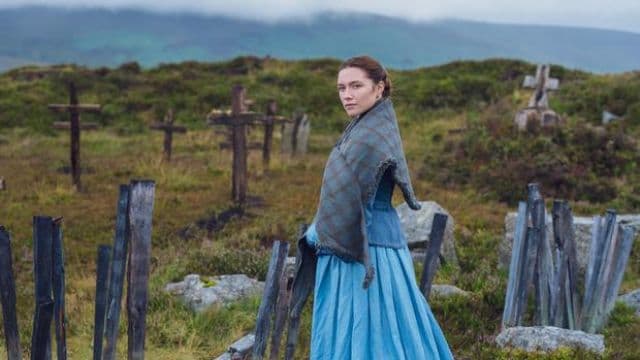
Societies' reaction to these girls – as documented by Donoghue in The Wonder – was one of fascination, speculation and shame, not dissimilar from the treatment of celebrities suspected of having eating disorders by the press in the 2000s. Images of Nicole Richie and the Olsen twins were plastered on the cover, along with estimates of their weights. At the same time, magazines were packed with food diaries and guides to fad diets.
Societal fascination didn't help the fasting girls of the 17th, 18th and 19th century and the tabloids' obsession with thin celebrities didn't serve the stars, nor the magazine's readership. While attitudes and awareness of eating disorders have changed in recent years, challenges remain. We're seeing more empathetic and thoughtful conversations on eating disorders in the media, but representations of anorexia tend to be narrow. In films and TV, anorexic patients tend to be thin, white, middle-class women. In reality, anyone is at risk of developing anorexia, and those who are less represented in media are significantly less likely to receive treatment.
Donoghue's source material may feel fascinating and indeed wondrous on first glance, but it also serves as an interesting insight into how the discourse on eating disorders has evolved. The Wonder also gives us pause to consider how the conversation can evolve further. While an increased understanding has brought us to less sensationalised representations, there is still plenty of room for improvement in reflecting the broad spectrum of people affected by anorexia.
If you have been affected by any of the details in this story you can contact Bodywhys on 01-2107906 or email [email protected].
Between the 17th and 19th century, medical journals recorded accounts of (mostly) young women, who would starve themselves for various periods, ranging from months to years. Reports of their health varied. Writing in The British Medical Journal, H. Geithen Morgan documents four cases of girls who starved themselves, and their societies' attitude towards them. In one instance, Jane Balan, an 11-year-old girl who lived in 17th century France, was said to have "remained normally active", while refusing to consume meat or drink for three years. She developed "extreme wasting" of the abdomen, but her breasts and limbs remained "fleshy". It's understood that some thought Jane's condition was due to a "wicked power" given to her in the form of a cursed apple.
In another case documented by Geithen Morgan, a young girl by the name of Martha Taylor refused food for 13 months. Physicians and surgeons observed Martha, hoping to detect a form of fraud taking place, but were unable to find any evidence that she was being covertly fed.
Girls like Martha and Jane were a source of fascination for their communities at the time, and the phenomenon of fasting girls continued until the mid-nineteenth century. As Geithen Morgan notes, until then, many members of the public were of the assumption that supernatural forces were at play.
https://twitter.com/picsfpugh/status/1559894723304759297
Journal entries described the fasting girls as marvels, or claimed they possessed "wonder-producing powers", while others diagnosed them as having some form of "hysteria". However, it is quite clear that these young women were suffering from anorexia, before the illness was properly recognised as a medical condition.
Societies' reaction to these girls – as documented by Donoghue in The Wonder – was one of fascination, speculation and shame, not dissimilar from the treatment of celebrities suspected of having eating disorders by the press in the 2000s. Images of Nicole Richie and the Olsen twins were plastered on the cover, along with estimates of their weights. At the same time, magazines were packed with food diaries and guides to fad diets.
Societal fascination didn't help the fasting girls of the 17th, 18th and 19th century and the tabloids' obsession with thin celebrities didn't serve the stars, nor the magazine's readership. While attitudes and awareness of eating disorders have changed in recent years, challenges remain. We're seeing more empathetic and thoughtful conversations on eating disorders in the media, but representations of anorexia tend to be narrow. In films and TV, anorexic patients tend to be thin, white, middle-class women. In reality, anyone is at risk of developing anorexia, and those who are less represented in media are significantly less likely to receive treatment.
Donoghue's source material may feel fascinating and indeed wondrous on first glance, but it also serves as an interesting insight into how the discourse on eating disorders has evolved. The Wonder also gives us pause to consider how the conversation can evolve further. While an increased understanding has brought us to less sensationalised representations, there is still plenty of room for improvement in reflecting the broad spectrum of people affected by anorexia.
If you have been affected by any of the details in this story you can contact Bodywhys on 01-2107906 or email [email protected]. 
Entertainment
entertainment

Books
Books
Books

Books
The Love Hypothesis official release date has been announced
The movie adaptation will be released this September Amazon MGM Studios has finally given us a release date for one of our most anticipated book-to-screen adaptations of the year. The Love Hypothesis, adapted from Ali Hazelwood’s bestselling STEM romance novel of the same name, will be released on Prime Video on September 23rd. Prime Video […]
Books
3h
These are the 7 best books to read during Pride Month
These are our top recommendations of books for you to read during Pride. At Her, we’re marking Pride Month by giving you a curated selection of our favourite books featuring LGBTQ+ authors and themes. From romance to fantasy, we’ve compiled a list of great recommendations for you to read this month, across all genres. View […]
Books
3h
Cecelia Ahern will release her first children’s book this summer
Books