






Life


Share
Published 15:22 12 Jan 2026 GMT
Updated 15:36 12 Jan 2026 GMT
 Add us as a preferred source on Google »
Facial balancing, skin boosters, baby Botox, pre-juvenation, lunchtime tox.
These are just a handful of the terms thrown at us through our screens daily. If you’re not on that side of the internet, congratulations, your sanity is still intact.
For the rest of us, it feels like perfection has been airbrushed into every corner of our feeds, and natural features are starting to feel rare.
It seems as if every influencer, celebrity, and public figure has been filtered to flawless perfection, so much so that our sense of authentic beauty is being reshaped.
I bet if you had uttered the words Baby Botox fifteen years ago, you would have been laughed out of the room. Today, it almost feels as routine as a dental check-up.
‘Minor tweaks’ such as lip fillers, flips or tucks, have become so normalised that when someone says they have never had any work done, they are in the minority.
With women sporting the perfect iPhone face constantly in the spotlight, it is no wonder our perception of natural ageing has become distorted.
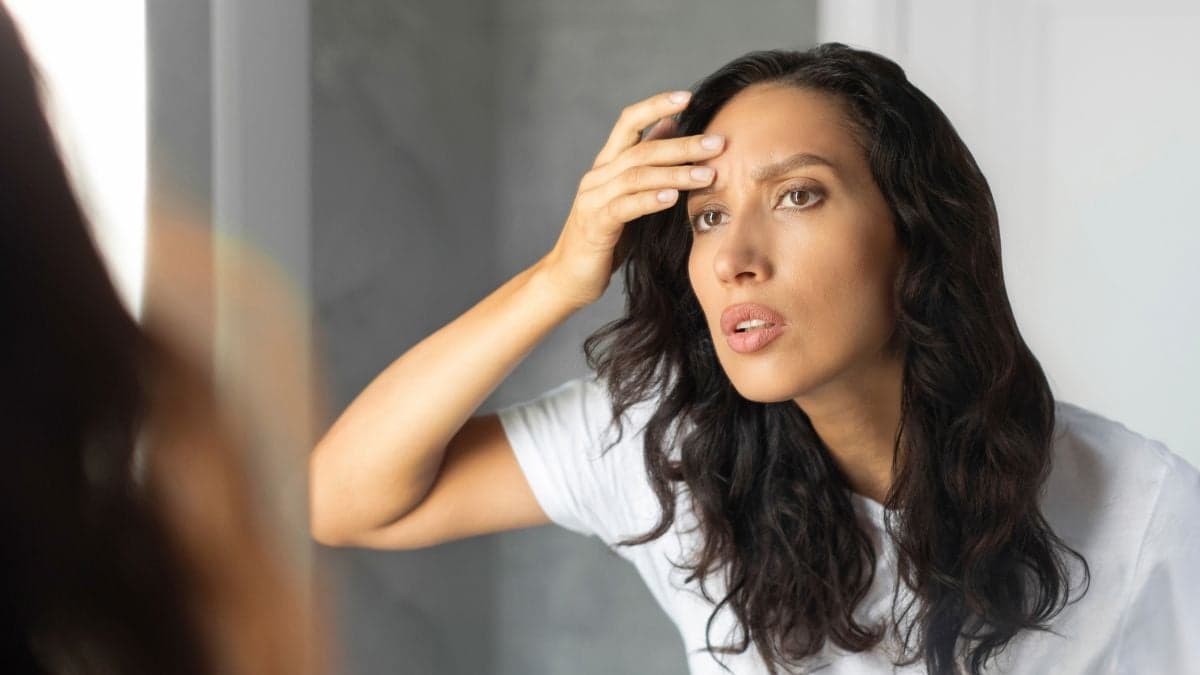
I am guilty of this, too. I’ve caught myself staring in the mirror, squinting at my forehead lines, seriously entertaining the idea of booking a Botox consultation.
And before you think that sounds reasonable, I just turned twenty-five.
In no world should it feel normal to consider altering your face at an age when you still get ID’d at the pub.
But can you blame me when all I see around me and on the internet are foreheads as tight as the skinny jeans I used to wear in 2016?
And yet, while it is genuinely refreshing to see celebrities like Jessie Buckley and Kate Winslet embrace ageing naturally, it is also a little heartbreaking that doing so is treated as something remarkable, as if accepting your own skin were an act of rebellion.
It has come to a point where I’m afraid we’ve lost sight of what real faces look like.
I’m definitely not the first person to point out that the faces we see on TV are all starting to look the same, big lips, tiny noses, strong jaws… Cosmetic enhancements and industry pressure to pursue ‘the perfect look’ have caused us to stray away from natural beauty and authenticity.
So much so that it sparked a viral debate on social media over whether today’s actresses resemble each other more than the distinct stars of past generations.
Don’t get me wrong, I think we know where it stems from, the pre-juvenation, the seemingly identical faces of celebrities, it’s driven by the societal pressure women are under to look beautiful, youthful, and effortlessly polished at all times.
Society has, for a long time, dictated a woman’s value to her appearance, implying that ageing is a flaw to be erased, and that a woman’s face should never betray time or stress and social media all but amplifies this.
It is no wonder so many of us feel compelled to conform, smoothing away minuscule lines, plumping our lips, all the while chasing a look that is not just curated but constructed.
In no way am I telling you what you can or cannot do to your face. In some cases, a little Botox, filler, or a facial treatment can feel empowering and give you that little confidence boost you’re looking for.
However, it’s important not to lose sight of why we want to change our appearance, because more often than not, it reflects insecurities that run far deeper than a few frown lines on your forehead.
So, yes, in some cases, cosmetic work can feel empowering when it’s a decision you make purely for yourself, however when it turns into the default rather than the option, it stops feeling like a choice.
In our rush to look perfect, we might be losing our grasp on how real faces move, age, crease, or show emotion. If we’re all starting to look the same, maybe the real question isn’t how to fix our faces, but why we’ve been taught they needed fixing in the first place.
Life
Life

Life
Life
Are saunas actually good for you? Here’s what experts have to say
Experts have confirmed whether saunas are actually good for our health. In Ireland, the use of saunas is becoming an increasingly popular pastime. As the Finnish custom becomes widespread across the country, people have been left wondering if it’s actually good for our health. Associate Professor of Extreme Environments at the University of Portsmouth, Dr […]
Life
5 days ago
Aspiring to launch your career? Then look no further than Ireland’s tourism sector
Brought to you by Fáilte Ireland Be part of the magic that makes Ireland a wonderful place to enjoy a short break. Deciding what career path you want to take post-school can be tough and filling out your CAO can be super daunting. Imagining a role that matches with your own ambition or envisioned lifestyle […]
Life
5 days ago
Shoppers praise budget-friendly fire pit that’s at its ‘lowest price’ in months
Life