




Life


Share
Published 16:41 26 Apr 2024 BST
 Add us as a preferred source on Google »
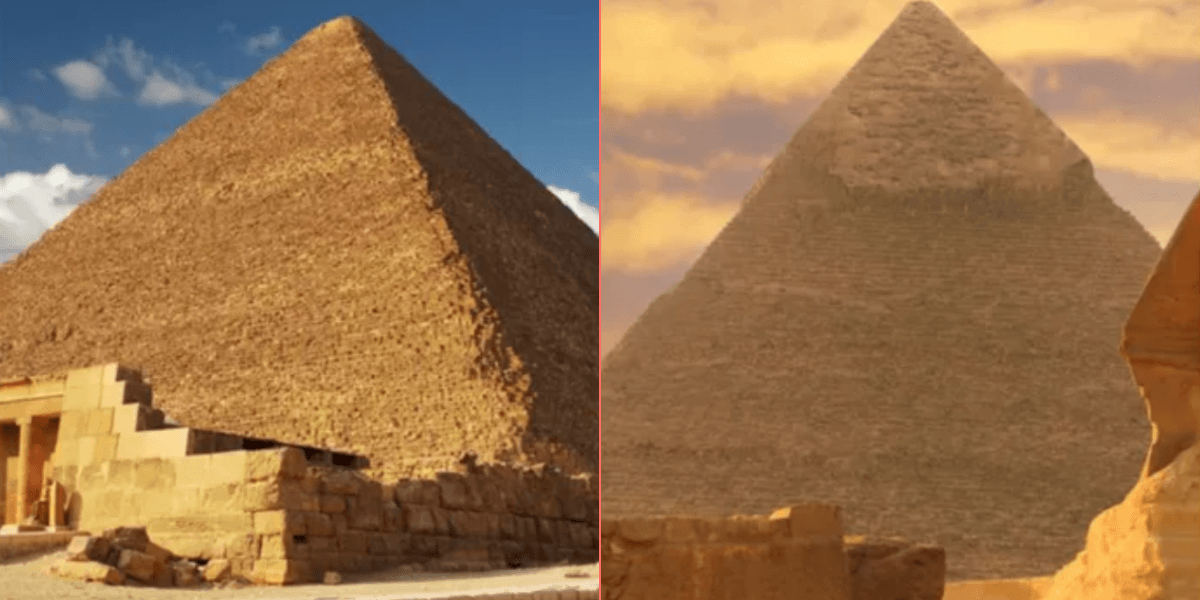
Around four and a half thousand years ago, the Ancient Egyptians (or just the Egyptians as they were known then) began building what would go onto become one of the seven wonders of the world: The Pyramids.
Built using millions upon millions of thick stone blocks, Pharaoh Khufu began the first Giza pyramid project, and the construction of such pyramids has long been the topic of speculation, argument, and conspiracy.
Just how could people with no technology, with no modern infrastructure, no outside help, build such monstrous and gargantuan structures which are so precise and specific to this day?
The average weight of a single stone block used to construct Pharaoh Khufu’s Great Pyramid weighs in at a brutal 2.5 tonnes. In the entirety of Khufu’s Great Pyramid there is around 2.3 million of these blocks.
Knowing this and knowing that such blocks were pushed, pulled, and dragged by human beings to build the pyramids has caused endless debate and criticism. Why? Because it doesn’t really make sense. Or at least, it didn’t.
Now historians believe they’ve cracked the truth of how these exceptionally heavy stones were actually moved, reports the New York Times.
A team of researchers speculated that the stones were moved using the assistance of a tributary of the Nile.
The team decided to test their theory using five fossilised soil samples from the Giza floodplain.
A lab in France then analysed the samples for pollen and vegetation which was commonly found around the Nile. This would prove that during the construction of the pyramids, there was a waterway there, which has long since dried up.
Archaeologists, dug 30ft deep into the sand to undercover the historic soil but it was all worthwhile when the team were able to confirm the existence of the Khufu Branch which carried the many millions of stone slabs to their final place in history.
However this wasn’t all they found, as they also discovered an ancient scroll, or a papyrus, which told of how one official, known as Merer, transported limestone along the Nile to a construction site in Giza, thus cementing their evidence even more.
Speaking about the discovery, Hader Sheisha, an environmental geographer, said that it would be ‘impossible’ to build the pyramids without the tributary.
She added: “I was so interested because this confirms that the transport of the pyramid’s building materials were moved over water.”
Sheisha concluded that she hopes this finding is the first of many. We hope so too.

Life

Life

Life

Life
‘I’m a 29-year-old woman and my income would shock my friends if it was made public’
In this edition of Her Money Diaries, we meet Gigi from Galway City, whose family lost all their money in the recession Welcome back to Her Money Diaries, our new financial series that discusses the money woes and wins of the woman of Ireland. This week’s Money Diary, we’re taking a look at Gigi from […]
Life
4 days ago
Men are more empathetic after becoming fathers, research has found
The study found that men are more understanding and patient after becoming fathers. How much does fatherhood change you? A lot, according to a new study, and in the best possible way. According to research completed by thortful, 26% of men are reportedly more empathetic, understanding and patient after having children. The study found that […]
Life
5 days ago
Life